Slow Burn: Why the Smartest Creators Are Ditching the Viral Dream for Something That Actually Lasts
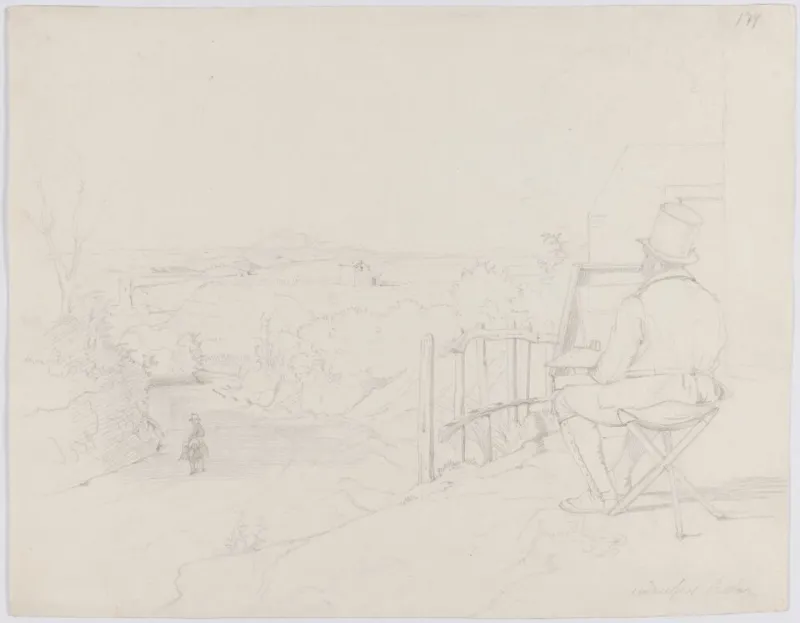
Photo: Wilhelm Marstrand, Public domain, via Wikimedia Commons
The Spike Is a Lie
Let's be honest about what going viral actually looks like for most artists. There's a spike — maybe a big one. Your follower count jumps. Your DMs flood. For about seventy-two hours, you feel like you've made it. And then the algorithm moves on, because it always does, and you're left chasing the next hit with nothing stable underneath you.
This is the trap. And a lot of really talented people are finally, blessedly, walking away from it.
Across creative communities — illustrators, musicians, ceramicists, independent filmmakers, textile artists — there's a quiet but unmistakable shift happening. Creators are stepping off the content treadmill and building something the attention economy never promised them: a career that doesn't collapse the moment the feed refreshes.
What "Sustainable" Actually Means Here
When we talk about sustainability in the arts, we're not just talking money, though that matters enormously. We're talking about creative longevity. The ability to keep making work without burning out, without compromising your vision to chase trends, and without feeling like your entire livelihood depends on whether a post lands on a Tuesday afternoon.
For Brooklyn-based textile artist and printmaker communities, the conversation has shifted from "how do I get more followers" to "how do I deepen my relationship with the people already here." That reframe is everything.
The math is actually pretty simple once you sit with it. A creator with 800 deeply engaged followers who buy their work, share it genuinely, and return season after season is running a more stable business than someone with 80,000 passive scrollers who never convert to anything. Reach without relationship is just noise.
The Tools Making This Possible
One of the reasons slow-growth strategies are actually viable right now — not just idealistic — is that the infrastructure has finally caught up with the intention.
Platforms like Substack and Patreon have given artists a direct line to their audiences that bypasses the algorithm entirely. You write, you make, you send — and it lands in someone's inbox or feed because they chose to be there. No boosting required. No dancing for the engagement gods.
Bandcamp has done something similar for musicians who don't want to be swallowed by streaming royalties that amount to fractions of a cent. Etsy and independent Shopify stores have let visual artists and makers build real storefronts without being at the mercy of a platform's shifting priorities.
And then there's the newsletter renaissance. Genuinely, if you're a creator and you're not building an email list, you're building on rented land. Social platforms can change their algorithm, throttle your reach, or disappear entirely (remember Vine?). Your email list is yours.
Mindset Is the Real Infrastructure
Here's the part that doesn't show up in a business model spreadsheet: the psychological shift required to commit to slow growth is significant. We live in a culture that equates speed with success and virality with validation. Choosing to opt out of that isn't just a strategy — it's a daily practice.
Creators who've made this shift talk about it in almost spiritual terms. There's a reclaiming of purpose that happens when you stop making work for the algorithm and start making it for the people who actually care. The work itself tends to get better, because you're not optimizing it for shareability. You're optimizing it for meaning.
Artists operating in niche spaces — think: South Asian diaspora illustrators, queer country musicians, independent animators doing experimental short films — often find that their specificity is their greatest asset. The more particular and genuine the work, the more fiercely loyal the community that forms around it. You're not trying to be everything to everyone. You're being something real to someone specific.
Community as the Business Model
Some of the most interesting sustainable career models we're seeing right now treat community not as a byproduct of the work, but as the actual product.
Artists running Patreons that fund ongoing projects. Illustrators doing limited-edition print drops exclusively to their email subscribers. Musicians building Discord servers where fans get early access, behind-the-scenes process content, and a direct line to the artist. These aren't gimmicks — they're genuine relationships monetized with mutual respect.
The key differentiator is that these models require the creator to actually show up as a human being, not a content machine. And audiences can feel the difference. They're not just buying a product — they're participating in something.
What the Algorithm Can't Measure
Here's what doesn't show up in your analytics dashboard: the person who bought your print and hung it in their living room. The listener who found your music during a hard year and played it on repeat. The reader who forwarded your newsletter to their friend because it said exactly what they'd been trying to articulate.
Those moments don't trend. They don't spike. But they compound over time into something that no algorithm can manufacture: actual cultural impact.
The viral machine will keep running. It'll keep producing its hits and its overnight sensations, most of whom will burn bright and fade fast. But alongside it — and increasingly, in deliberate opposition to it — a different kind of creative economy is taking shape.
Slower. More intentional. Built on real connection rather than manufactured reach.
For the artists brave enough to play the long game, that's not a consolation prize. That's the whole point.