I Am Not Your Diversity Hire: When Being a Brown Artist Means Everyone Wants a Piece of You Except Your Actual Art
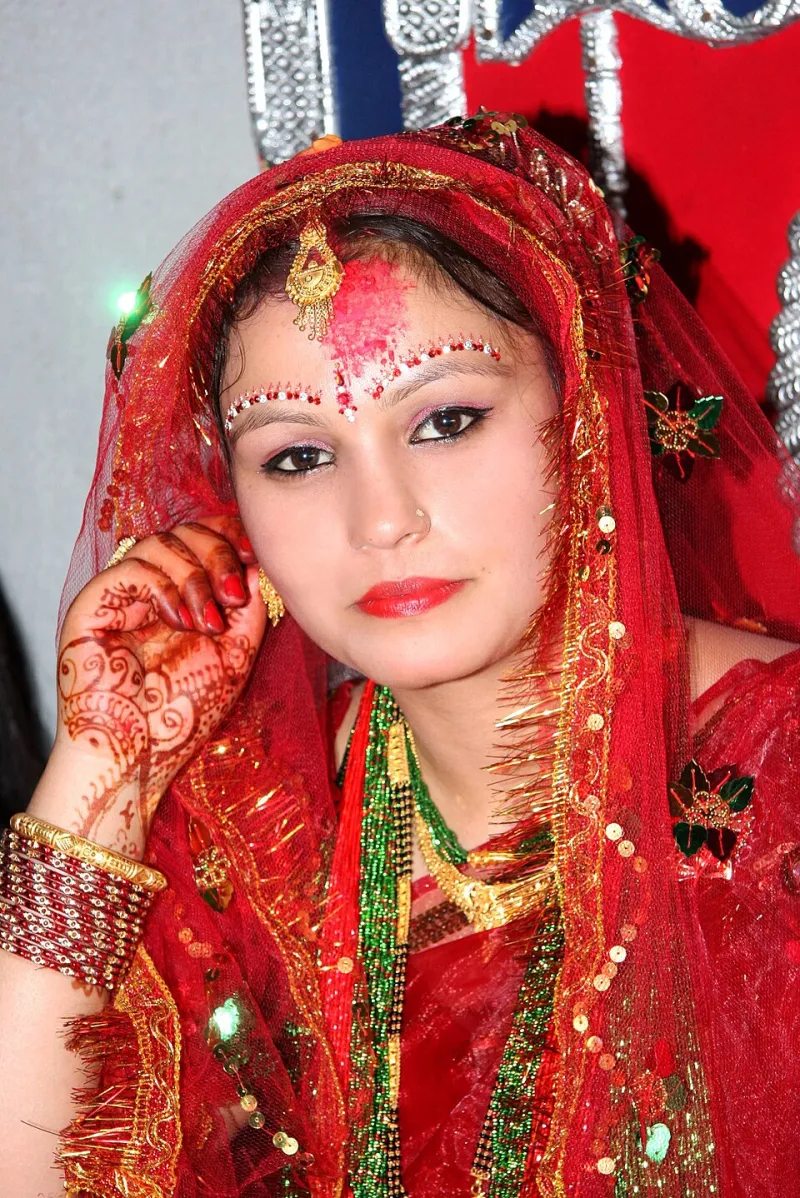
Photo: Nirmal Dulal, CC BY-SA 3.0, via Wikimedia Commons
The Ask Nobody Says Out Loud
It usually doesn't come right out and say what it is. It shows up as a gallery curator asking if your next series will "explore your heritage." Or a brand partnership inquiry that mentions, almost in passing, how much they value "authentic South Asian voices" — right before they send a brief that tells you exactly what that voice should sound like. Or a festival that programs you alongside three other brown artists, all in the same panel, all asked the same question: What does it mean to make art as a person of color in America today?
The ask is always dressed up as opportunity. And sometimes it is one. But underneath it, there's a transaction happening that nobody wants to name: your identity is being purchased, and your art is just the packaging.
I've been thinking about this a lot lately — about what it costs South Asian and BIPOC artists to constantly navigate the gap between who they are and what institutions, brands, and audiences want them to be. And more importantly, about what it looks like to refuse that negotiation entirely.
The Representation Paradox
Here's the bind: visibility matters. Representation matters. When a young South Asian kid sees a painter or musician or filmmaker who looks like them succeeding in American cultural spaces, something real happens. That's not nothing. That's actually a lot.
But representation as it's usually practiced by institutions is a fundamentally different thing from representation as a lived reality. Institutions want a body in a seat. They want a face in a brochure. They want the optics of inclusion without the structural discomfort that genuine inclusion requires.
And the artists who get selected — who get the grants, the gallery shows, the magazine profiles — often find themselves in an impossible position. You've been chosen, in part, because of your identity. Now you're expected to make work that justifies that choice. Work that is legible, that explains, that translates your experience into something a predominantly white audience can consume without too much friction.
What gets quietly, systematically deprioritized is the art that doesn't do that work. The abstract. The experimental. The personal-without-being-ethnographic. The work that is South Asian in the way that all art is influenced by the life of its maker — incidentally, not programmatically.
The Toll of Being a Stand-In
Artists who've spent years navigating this talk about a specific kind of creative erosion. Not burnout exactly, but something more like drift. You start making choices based on what will be legible to the gatekeepers rather than what feels true to the work. You frame your artist statement in ways that foreground your identity because you've learned that's what gets you in the room. And slowly, almost imperceptibly, the work starts to follow the framing.
There's also the exhaustion of being asked to speak for an entire community. South Asian identity in the US spans generations, religions, languages, classes, immigration histories — it is not a monolith, and any artist who tells you their work represents the South Asian experience is either lying or has been convinced by someone else's marketing. The pressure to be representative is also, quietly, a pressure to flatten.
What Reclaiming Looks Like
Some artists are finding ways to hold the tension — to be visible and specific without being reducible. They're doing it through intentional framing, through the communities they build around their work, and sometimes through the collaborations they choose and the ones they decline.
Reclaiming creative autonomy doesn't always look like rejection. Sometimes it looks like a South Asian sculptor whose work is deeply influenced by Mughal architectural geometry but refuses to explain that in every artist statement because the work should be able to exist without a cultural footnote. Sometimes it looks like a musician who incorporates tabla rhythms into her compositions and declines to perform at events where she's the only brown face on the lineup. Sometimes it looks like saying yes to visibility and no to the terms attached to it.
The artists who seem most grounded in their practice are the ones who've gotten clear on the difference between their identity informing their work — which is inevitable and honest — and their identity being instrumentalized by someone else's agenda, which is a very different thing.
The Institutions Need to Do Their Part
Let's be clear: this is not entirely on the artists to solve. The responsibility for tokenization lies with the institutions that practice it. Galleries, festivals, brands, and publications that are serious about inclusion need to ask themselves harder questions than "do we have enough brown faces in this lineup?"
They need to ask: Are we programming these artists because of the quality and vision of their work, or because their presence checks a box? Are we giving them the same interpretive freedom we give white artists? Are we asking them to explain themselves in ways we'd never ask of their peers?
And they need to be honest about the answers.
Art That Refuses to Explain Itself
The most radical thing a Brown artist can do right now might be to make work that doesn't do the labor of translation. Work that exists on its own terms, that doesn't apologize for its references or soften its edges for easier consumption. Work that trusts its audience to meet it where it is.
That's hard in a market that rewards legibility. It requires a kind of creative courage that doesn't always get celebrated because it doesn't always get selected.
But it's the work that tends to last. The work that doesn't perform identity — that simply has one, the way all human work does — is the work that ends up meaning something beyond the moment it was made in.
You are not a checkbox. Your art is not a press release for your heritage. And the sooner we — artists, institutions, audiences — internalize that, the closer we get to a cultural landscape where Brown artists can just make things. Freely. Fully. Without having to be anyone's anything first.