Roots for Sale: When 'Being Authentic' Becomes a Performance for Someone Else's Comfort

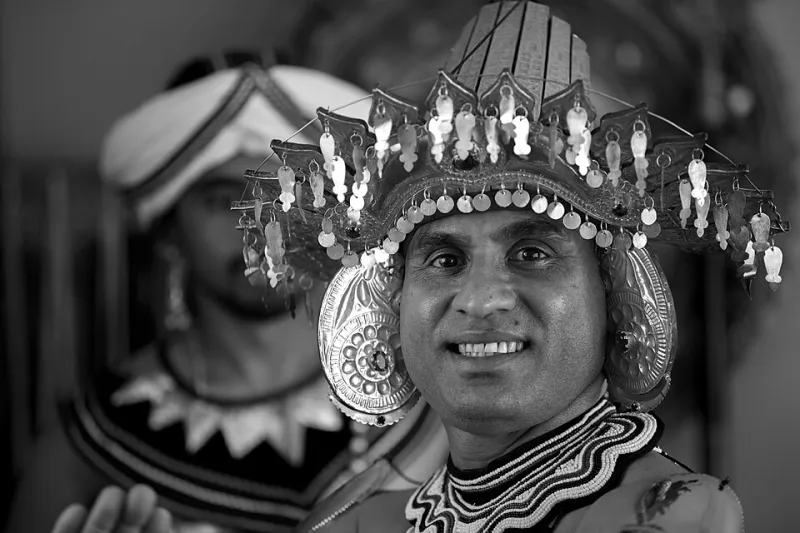
Photo: Nothing without you., CC BY 4.0, via Wikimedia Commons
The Origin Story Industrial Complex
There's a pitch that works every time. You're a South Asian artist — painter, musician, designer, filmmaker, doesn't matter — and someone asks you to tell your story. If you lead with your grandmother's village, the smell of incense in a childhood home, the first time you felt split between two worlds, the room leans in. The algorithm rewards it. The grants come through. The brand partnership lands.
Nobody tells you outright that this is the formula. But after a while, you start to notice the shape of the door you're expected to walk through.
This is what some creators are starting to call the authenticity trap — the quiet but powerful commercial pressure on immigrant and South Asian artists to perform their heritage as the primary currency of their creative identity. It's not a new phenomenon, but it's gotten sharper and more codified in the social media era, where personal narrative is content and cultural identity is a niche.
What 'Authentic' Actually Means (To Whom?)
The word authentic sounds like freedom. It implies something raw, unmediated, real. But in practice, authenticity in the creative marketplace operates more like a costume fitting. There's a version of South Asian identity that Western audiences find legible and appealing — rooted in tradition, warm with nostalgia, visually rich, spiritually inflected — and there's pressure, often subtle, sometimes explicit, to deliver that version on demand.
Take the visual arts space. A South Asian painter working in abstraction might spend years building a body of work that has nothing to do with their ethnic background. Then a gallery opportunity arrives, and the curator is excited — but they're most excited when the artist mentions their family's history with textile craft, or references Mughal miniature painting as an influence. The abstraction is fine. The abstraction plus the cultural story is a sellable narrative.
Some artists make peace with that. Others feel like they've handed something over.
One designer who works in New York's fashion-adjacent world — and asked not to be named because she still works with some of the brands she's critiquing — put it plainly: "The moment I started centering my South Asian identity in my work, the opportunities tripled. I'm not saying the work isn't genuine. But I'm aware that I'm giving people what they want to see. And I wonder sometimes what I would have made if nobody was watching."
The Commodification Playbook
The creative industry has always monetized identity. What's shifted is the sophistication of the machinery. Brands now have entire teams dedicated to "authentic storytelling" and "community-led content" — language that sounds progressive but often functions as a more efficient extraction of cultural capital from marginalized creators.
The formula tends to go like this: identify an underrepresented community with a compelling visual or narrative culture, recruit creators from that community with the promise of visibility and platform, frame the collaboration as celebration and empowerment, and then use the resulting content to sell product or build brand equity. The creator gets exposure. The brand gets credibility. The culture gets flattened into a mood board.
For South Asian creators specifically, there's often an added layer of expectation around spiritual or philosophical depth — the idea that art emerging from this background should carry wisdom, transcendence, a kind of ancient knowing. It's a flattering stereotype, but it's still a stereotype, and it narrows the range of what artists are invited to make.
The Cost of Playing Along
The financial incentives are real, and it would be condescending to ignore that. For many immigrant and first-generation artists, leaning into cultural identity isn't just a marketing strategy — it's a survival strategy in an industry that otherwise treats them as peripheral. If telling your grandmother's story gets you the grant that buys you six months of studio time, you take it.
But there are costs that don't show up on the balance sheet. Several artists have described a kind of creative claustrophobia that sets in when their cultural identity becomes their primary brand asset. You start to self-censor work that doesn't fit the narrative. You hesitate before making something that might confuse the audience you've built. You wonder if your most interesting ideas — the ones that have nothing to do with where you're from — will ever get a real hearing.
There's also the exhaustion of perpetual explanation. When your identity is your brand, you're always available to be a representative, a educator, a symbol. That's a lot of invisible labor sitting on top of the actual creative work.
Reclaiming the Terms
Some artists are pushing back by refusing the binary. They're not abandoning their cultural backgrounds — but they're insisting on complexity, contradiction, and irreverence. They're making work that's rooted in South Asian tradition and deeply weird, or deeply political, or deeply personal in ways that don't resolve into a tidy heritage narrative.
Others are getting strategic about where and how they share cultural context. They're choosing to lead with the work and let the biography be background noise rather than the headline.
What's clear is that the conversation is happening more openly than it used to. Artists are naming the trap, which is the first step toward building something outside it. Authenticity, at its best, shouldn't be a product you deliver to someone else's specifications. It should be the thing that's left when you stop performing for the room.
The roots are real. The question is who gets to decide what to do with them.