Same Playground, Different Rules: Why Cheap Tools Don't Equal Real Creative Power
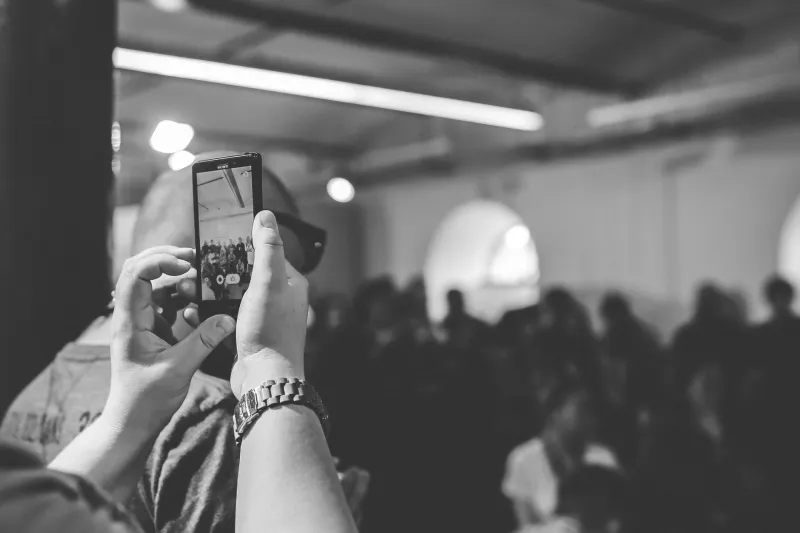
Somebody in a YouTube ad told me last week that with the right software, anyone can build a studio-quality album from their bedroom. They weren't wrong. They also weren't telling the whole truth.
We've spent the last decade celebrating the democratization of creative tools like it was a civil rights victory. GarageBand. Canva. Substack. CapCut. The price of entry dropped from "you need institutional backing" to "you need a decent WiFi connection." And that is meaningful. I'm not going to pretend it isn't. But somewhere in all that celebration, we started confusing the ability to make something with the ability to be seen, compensated, and sustained for making it. Those are not the same thing. Not even close.
The Illusion Runs Deep
Here's the story we got sold: the gatekeepers — the label executives, the gallery directors, the publishing houses — have been dethroned. The internet killed them. Now it's a meritocracy. Make good work, find your audience, win.
Except the gatekeepers didn't get dethroned. They got cheaper to imitate. The new gatekeepers are algorithms, and algorithms are not neutral. They're trained on existing engagement patterns, which means they're optimized to reward what already performs — which means they reward what already has an audience — which means they reward people who already had some version of a head start.
A creator with 200 followers posting genuinely innovative work competes for attention in the same feed as a creator with 2 million followers posting something mid. The platform treats them identically at the infrastructure level. But the algorithm? The algorithm is not confused about who it's rooting for.
Attention Is the New Velvet Rope
The old gatekeepers controlled access to production and distribution. Now production is cheap. Distribution is technically open. But attention — the thing that makes distribution actually matter — is ruthlessly concentrated.
This is what economists sometimes call "attention economics," and it has a logic that feels almost cruel once you see it clearly. There's a finite amount of human attention in the world. The platforms that aggregate that attention have every incentive to keep it flowing toward established names, proven formats, and familiar aesthetics. Risk is bad for engagement metrics. Novelty — real novelty, the kind that challenges rather than flatters — is expensive for audiences to process.
So who benefits from the "everyone can create" myth? Honestly? The platforms benefit. Every person who downloads the app and starts posting is a content producer. More content means more time on platform. More time on platform means more ad inventory. The creative economy, in this framing, is partly a massive volunteer labor force keeping the feed full so the platforms can sell against it.
That's not cynicism. That's just reading the business model.
The Network Effect Nobody Mentions
Here's the thing that doesn't fit neatly into the democratization narrative: the removal of formal barriers has made informal barriers matter more.
When you needed a record deal, a gallerist, or a book contract to reach an audience, the barrier was explicit. You either had it or you didn't. Now the barriers are social, relational, and economic in ways that are harder to name. Do you have someone with an existing platform willing to amplify you? Do you have time — actual free time, not stolen minutes — to build an audience consistently over years? Do you have a network that shares your work because they know you, not just because they discovered you through an algorithm?
Those things aren't equally distributed. They never were. But when the barrier was "get a contract," at least you could point to the door and say it was closed. When the barrier is "nobody saw it," the responsibility for invisibility quietly shifts onto the creator. You just didn't hustle enough. Your content wasn't compelling enough. You didn't understand the algorithm.
This is a very convenient story for people who benefit from the current distribution structure.
The Creators Who Actually Break Through
Look carefully at the artists who "made it" through the so-called new creative economy — the ones whose stories get told as proof that the system works — and you'll often find one of a few things: an existing audience from somewhere else (a school, a city, a family name, a previous platform), a co-sign from someone who already had reach, a piece of content that went algorithmically viral in a way that is essentially unreplicable and unpredictable, or resources that allowed them to sustain the work long enough for luck to find them.
None of those things are inherently wrong. But none of them are proof that the tools alone did the work.
So What Do We Actually Do With This?
I don't think the answer is to stop using the tools. The tools are good, actually. Being able to produce and publish without institutional permission is genuinely radical compared to what came before. We shouldn't throw that away.
But we should stop letting the existence of cheap tools absolve us of the harder conversation about structural power. We should stop congratulating platforms for "giving creators a chance" when what they actually gave creators was the chance to generate content for free. We should demand — loudly, specifically — that platforms explain how their recommendation systems work, who they reward, and why.
And we should maybe stop measuring creative success primarily by virality and follower counts, because those metrics were invented by platforms to serve platforms. There are other measures. Community depth. Artistic development. Cultural contribution. Longevity.
The gatekeepers didn't leave. They just made the gate look like an open field. That's a harder thing to push against — but it's worth knowing what you're actually pushing against.