Permission Slip Not Required: How Artists Broke the Velvet Rope
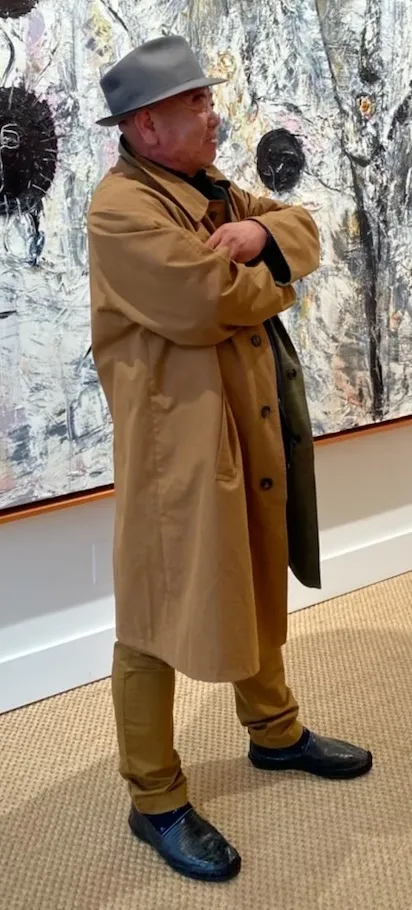
Photo: CuseMc, CC BY-SA 4.0, via Wikimedia Commons
There used to be a very specific ritual to becoming a legitimate artist in America. You hustled your portfolio to the right gallery. You sent your manuscript to the right literary agency. You pressed your demo and mailed it — actually mailed it, in an envelope — to a record label that would almost certainly never listen to it. The gatekeepers held the rope, and you stood outside, waiting.
That rope is fraying. And honestly? The people who used to hold it look a little tired.
The Exhaustion Is Real
Talk to anyone working inside a major cultural institution right now — a mid-size gallery director, a publishing acquisitions editor, a label A&R rep — and there's a particular kind of fatigue you'll hear underneath the professional polish. The game they were trained to play has changed faster than the rulebook could be rewritten. They spent years curating taste, and now taste curates itself in real time on platforms they don't control, through algorithms they didn't design, in front of audiences they can't predict.
Meanwhile, artists who once would have spent years angling for institutional approval are building direct relationships with their audiences — and those relationships are proving more durable than anyone expected. A ceramicist in Phoenix with 80,000 Instagram followers doesn't need a gallery show to validate her work. A self-published novelist who sells 50,000 copies through his newsletter doesn't need a Big Five imprint to tell him he's a real writer. The validation infrastructure that once felt permanent is starting to feel optional.
This isn't just a vibe shift. It's a structural realignment.
What Bypassing Actually Looks Like
It's easy to romanticize the DIY path without being honest about what it requires. Building a direct audience is work — unglamorous, relentless, often thankless work. The artists who've done it successfully aren't just talented; they're strategic. They understand distribution. They understand community. They understand that showing up consistently over two years beats going viral once.
Take the independent music scene, where this dynamic is most visible. Artists like Russ or NF built massive fanbases entirely outside the traditional label system before the industry came calling — and by that point, they could negotiate from a position of actual leverage. The labels needed them more than they needed the labels. That's a reversal that would have been almost unthinkable fifteen years ago.
The visual art world is seeing similar cracks. Artists who built followings through social media — sometimes dismissed as "influencers" by the gallery establishment — are now selling original work directly to collectors, running waitlists for prints, and collaborating with brands on their own terms. Some of them are now getting gallery interest. Funny how that works.
When Institutions Finally Come Knocking
Here's the thing nobody talks about enough: institutions haven't disappeared. They've just lost the monopoly on legitimacy. And some of the smarter ones have figured out that the only way forward is to actually listen to the artists they spent years ignoring.
Museums are doing community partnership programs that would have seemed radical a decade ago. Publishers are acquiring books from writers who self-published their way to proven audiences. Labels are offering more favorable deals — or at least, less predatory ones — because they know an artist with 500,000 monthly listeners on Spotify already has a negotiating position.
This is what institutional adaptation looks like: not a revolution, but a reluctant pivot. The gatekeepers aren't gone. They've just stopped being the only path through the gate.
For artists from marginalized communities — and for South Asian artists in particular, who have historically been tokenized or ignored by mainstream American cultural institutions — this shift carries specific weight. When the establishment's approval was the only currency that mattered, a lot of genuinely significant work got filtered out because it didn't fit a predetermined narrative about what "diverse" art was supposed to look like or say. The direct-audience model doesn't eliminate bias, but it creates an alternative economy where work can find its people without needing institutional translation.
The New Leverage
What's emerging isn't a world without gatekeepers. It's a world with more gates and more gatekeepers, some of whom are the artists themselves. That's messier in some ways — the signal-to-noise problem is real, and discoverability remains genuinely hard. But it's also more honest about where power actually lives.
The artists who are thriving in this moment share a few common traits. They're not waiting for permission to be taken seriously. They've built something real — a body of work, a community, a conversation — before anyone in a corner office decided to notice. And when institutions do come calling, they're arriving at the table with leverage they earned themselves.
That's not just a career strategy. It's a different relationship to creative authority altogether. One where the work speaks first, and the establishment figures out where it fits — not the other way around.
The velvet rope is still there. It's just that more people have realized they can walk around it.