Off the Grid and On Purpose: How Diaspora Creators Are Building Audiences the Algorithm Will Never Find

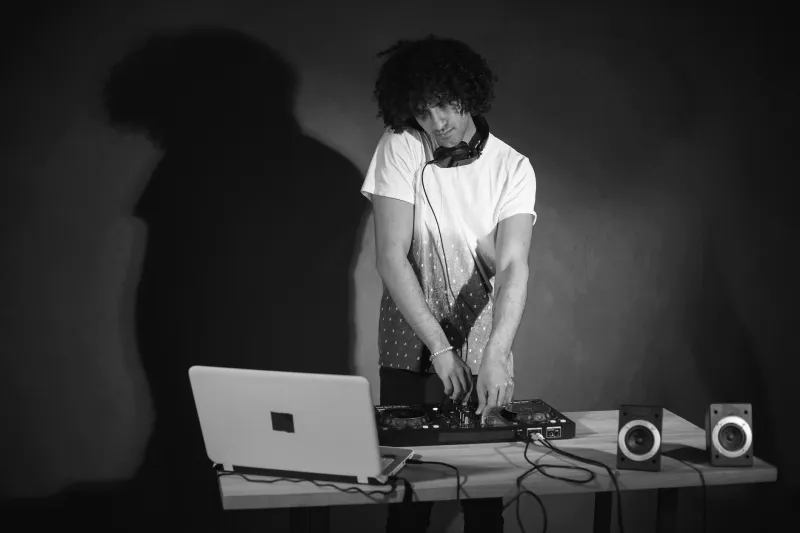
Photo by Photo by Vitaly Gariev on Unsplash on Unsplash
There's a particular kind of exhaustion that comes from playing a game you know is rigged. You post at the right time, use the right hashtags, study the analytics dashboard like it's scripture — and still, the numbers flatline. Or worse, they spike for a week and then vanish, leaving you chasing a high that the platform manufactured and then took away.
For a lot of South Asian and diaspora artists in the US, that exhaustion hit a wall. And instead of trying harder, they started building differently.
What's emerging isn't a trend, exactly. It's more like a quiet infrastructure revolution — a network of parallel economies, alternative distribution channels, and direct-to-community models that completely sidestep the algorithmic gatekeeping that has come to define mainstream creative life. It's not glamorous. It doesn't always go viral. But it works. And for the people building it, that's the whole point.
The Discovery Myth
Let's be honest about what "getting discovered" has always meant. It meant getting noticed by someone with institutional power — a label, a gallery, a streaming platform, a major publication — who would then amplify your work to an audience they already controlled. The artist's job was to be visible enough, legible enough, and palatable enough to earn that co-sign.
For diaspora creators, that bargain came with an extra layer of compromise. Getting discovered often meant getting flattened — reduced to a cultural shorthand, a novelty, a "diverse voice" that fit neatly into someone else's programming strategy. The algorithm, in a lot of ways, is just that old gatekeeping system with a tech makeover. It rewards what's already working, amplifies what's already familiar, and quietly buries anything that doesn't map onto existing patterns of engagement.
So what happens when you stop trying to be legible to the machine?
Discord, Direct Mail, and the New Patron Model
Ask around in certain creative circles and you'll find artists who've essentially unplugged from the mainstream distribution stack — not as a political statement, but as a practical one. Musicians who've moved their real community to Discord servers where subscribers get early releases, behind-the-scenes voice notes, and direct conversation with the artist. Visual artists who've ditched Instagram as a sales channel in favor of email lists that convert at rates the algorithm could never touch. Writers building Substack communities around South Asian diaspora storytelling that have turned into full-fledged creative ecosystems.
These aren't backup plans. They're primary strategies.
The direct patronage model, in particular, has been quietly transformative. Platforms like Patreon and Buy Me a Coffee get talked about mostly in the context of YouTubers and podcasters, but South Asian artists across mediums have been using them to fund work that would never survive a pitch meeting at a mainstream outlet. A textile artist documenting partition-era craft traditions. A composer blending Carnatic and jazz structures. A filmmaker making short docs about second-generation identity in the Midwest. None of these projects were "marketable" in the conventional sense. All of them found audiences willing to pay to make them real.
Regional Platforms and the Hyperlocal Play
Beyond the usual suspects, there's also a growing ecosystem of regional and diaspora-specific platforms doing serious cultural work. South Asian streaming services, community radio shows, regional arts collectives with their own newsletters and event circuits — these aren't niche consolation prizes. They're often the spaces where the most interesting creative conversations are actually happening.
In cities like Fremont, Edison, Houston, and Chicago — places with dense South Asian diaspora communities — there are local creative economies that barely register on the national cultural radar but are genuinely thriving. Artists who perform at community festivals, sell work through cultural organizations, and build reputations through word-of-mouth networks that have been running for decades. The algorithm doesn't touch any of it. The audience loyalty is off the charts.
What these regional ecosystems offer that the mainstream machine can't is context. When your audience already shares a cultural reference point — already knows what a particular song means at a wedding, already understands the weight of a particular image — you don't have to spend creative energy explaining yourself. You can go deeper.
Audience Loyalty Is the Business Case
Here's the thing that mainstream platforms don't want you to internalize: algorithmic reach and audience loyalty are not the same thing, and they're often in tension with each other.
A creator with a million followers and 0.5% engagement has a very different business than a creator with ten thousand deeply invested subscribers who open every email, buy every release, and show up to every event. The second creator has something the first one doesn't: a community that actually belongs to them, not to the platform.
For diaspora artists, building that kind of loyalty has meant being genuinely, specifically themselves — not a palatable version of themselves, not a cross-culturally accessible version, but the full, complicated, reference-dense, sometimes-untranslatable version. And the counterintuitive discovery is that specificity, real specificity, builds deeper loyalty than broad appeal ever does.
An audience that feels like a creator is speaking directly to them — to their particular experience, their particular cultural memory, their particular sense of humor — will follow that creator almost anywhere. Off Instagram. Off YouTube. Into a Discord server, onto a mailing list, to a ticketed virtual event, into a Bandcamp page. That kind of loyalty doesn't evaporate when the algorithm changes. It compounds.
Building Without Waiting
None of this is easy, and it would be dishonest to romanticize it. Building a direct audience from scratch takes longer than riding an algorithmic wave. It requires consistent communication, genuine community management, and a willingness to show up for your people even when the numbers are small. There's no dopamine hit from a viral moment to keep you going.
But there's also something that viral moments rarely deliver: stability. A community you've built through direct relationships isn't subject to a platform's quarterly pivot or a sudden change in what the algorithm decides to reward. It's yours in a way that a follower count never really is.
For South Asian and diaspora artists who've spent years being told their work is "too niche" or "hard to market," that stability means something. It means you don't have to make yourself smaller to fit someone else's distribution model. You can make exactly the work you want to make and trust that the people who need it will find it — because you've built the infrastructure to reach them directly.
The algorithm doesn't know your name. That's fine. Your audience does.