Your Story, Their Secret: The Impossible Math of Making Art From Family
There's a particular kind of silence that lives in immigrant households. Not the peaceful kind. The kind that has weight, texture, history. The kind that children grow up pressing their ears against, trying to decode. And then one day, some of those kids become artists — and suddenly that silence isn't just a family heirloom. It's material.
This is the inheritance problem nobody warns you about in art school.
The Archive You Never Asked For
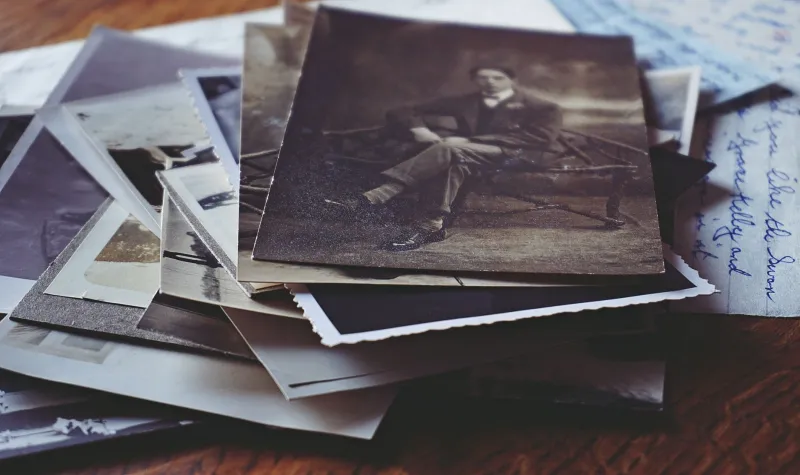
Diaspora creators are, almost by definition, sitting on a goldmine of story. Displacement, survival, reinvention, grief, love translated across cultures and time zones — this stuff is the raw ore of genuinely powerful art. Writers, filmmakers, visual artists, musicians across South Asian, Black, Latino, and immigrant communities broadly have built entire careers reaching into that family archive and pulling something luminous out of it.
But here's what doesn't make it into the artist statement: that archive belongs to other people too.
Your grandmother's immigration story is also your grandmother's story. Your father's depression, your aunt's marriage, your mother's sacrifice — these aren't just chapters in your coming-of-age narrative. They're someone else's lived experience, often someone who processed those experiences in the only way they knew how: by not processing them at all. By locking them down. By deciding, consciously or not, that survival meant silence.
When you crack that open and put it on a gallery wall or in a memoir or inside a concept album, you're not just making art. You're making a choice on behalf of people who didn't get a vote.
The Ethics Nobody Wants to Talk About
Let's be honest — the creative world tends to romanticize this tension without sitting in it long enough to feel uncomfortable. We celebrate the brave autofiction novelist who writes about her mother's trauma. We give standing ovations to the documentary filmmaker who exposes generational dysfunction with unflinching honesty. The critical apparatus loves this stuff. It reads as courage.
And sometimes it is. But sometimes it's also a little bit of a betrayal.
That's not a reason to stop making the work. It's a reason to make it with your eyes open.
Some families operate under what you might call a privacy ethic — particularly families that came from places where exposure was dangerous, where the wrong information in the wrong hands could mean deportation, violence, or social destruction. When your parents told you not to talk about certain things, they weren't necessarily being repressive. They were passing down a survival strategy that made complete sense in a different context. The fact that you're now an artist in America, in 2025, where vulnerability is practically a brand strategy, doesn't erase the logic of where that silence came from.
So what do you do with that?
How Some Creators Are Navigating It
There's no clean answer, but there are approaches worth looking at.
Some artists build deliberate distance into the work — using fictional frameworks, composite characters, or abstraction to tell true emotional stories without exposing specific people. The facts become approximate. The feeling stays exact. This isn't dishonesty; it's a different kind of craft. It asks the artist to find the universal inside the particular rather than leaning on the particular as spectacle.
Others go directly to the source. They have the hard conversation first. They sit with a parent or a sibling and say, I want to make something about this. Can we talk about it together? Sometimes that conversation becomes part of the work itself. The negotiation, the resistance, the eventual understanding — or the continued disagreement — that's also a story worth telling. Some of the most compelling creative projects in recent years have been collaborative in this way, folding family members into the process rather than treating them as subjects to be captured.
And then there are artists who decide the work comes first — who make the choice that their truth is theirs to tell, full stop, and live with the relational consequences. This is a legitimate position. It's also one that tends to look cleaner from the outside than it feels from the inside.
What Gets Lost in the Waiting
Here's a counterweight worth holding: there's a cost to not telling the story, too.
Generational trauma that goes unnamed tends to travel. It shows up in bodies, in patterns, in the way people love or can't love. Art that names what families leave unsaid isn't just self-expression — it can be a form of collective healing. It can give language to cousins and siblings and community members who felt the same thing but never had a framework for it.
The Desi kid in New Jersey who reads your essay about your father's untreated grief and finally feels seen — that matters. The second-generation Punjabi woman who watches your short film and calls her mom for the first time in two years because something cracked open — that's real. The work does something in the world that silence never could.
So the math doesn't resolve cleanly. You're weighing your right to your own story against your family's right to their privacy. You're weighing the potential harm to specific people against the potential healing for a broader community. These things don't cancel each other out. They coexist, and you have to make art inside that tension rather than waiting for it to disappear.
The Conversation Before the Canvas
If there's anything like a practice worth recommending, it might just be this: slow down before you hit publish or submit or release. Not to second-guess the work itself, but to ask yourself who else is in it and what you owe them — not legally, but humanly.
Maybe you owe them a heads-up. Maybe you owe them a conversation. Maybe you owe them a fictionalized name or a changed detail that protects them without gutting the truth of what you made. Maybe, in some cases, you owe them the chance to say no — and you decide to proceed anyway, fully aware of what that costs.
There's no version of this where everyone walks away clean. Family stories are messy because families are messy. Art made from that mess is going to carry some of the mess with it.
But the artists who seem to navigate this best aren't the ones who found a loophole. They're the ones who took the weight seriously — who made the work anyway, and made it with enough love and enough honesty that even the people who felt exposed could eventually see themselves in it.
That's not a formula. It's barely even advice. But it might be the only thing that holds.