The Velvet Rope Is Rotting: What Happens When Nobody Needs Your Stamp of Approval Anymore

Photo by Photo by aiden patrissi on Unsplash on Unsplash
The Authority Nobody Asked For
There's a particular kind of confidence that comes from never having been questioned. For most of the twentieth century, cultural institutions — the big museums, the major record labels, the prestigious festival circuits, the blue-chip galleries — operated with exactly that kind of confidence. They decided what was good. They decided who got seen. And because they controlled the infrastructure, the money, and the press relationships, their decisions had a way of becoming reality.
That era isn't ending. It has already ended. What we're watching now is the cleanup.
The shift didn't happen overnight, and it didn't happen cleanly. But spend any time paying attention to where creative energy is actually moving in this country and the picture gets pretty clear: the gatekeepers are in recession. Their authority is contracting. And the artists and audiences who once needed their blessing are increasingly building something entirely different — something the institutions weren't invited to.
What Bypassing Actually Looks Like
Consider what happened with the visual art world in the last few years. When Los Angeles-based artist Gio Swaby started making large-scale textile pieces celebrating Black women's bodies and interiority, she didn't wait for a major museum acquisition to validate her practice. Her work moved through community spaces, Instagram, and word-of-mouth before institutions came knocking. By the time the Art Institute of Chicago came calling, the audience already existed. The institution wasn't the discovery — it was the confirmation.
That sequencing matters enormously. In the old model, the institution discovered, the audience followed. Now audiences discover, and institutions follow — often awkwardly, often late, occasionally with the energy of someone who just learned about a trend that peaked two years ago.
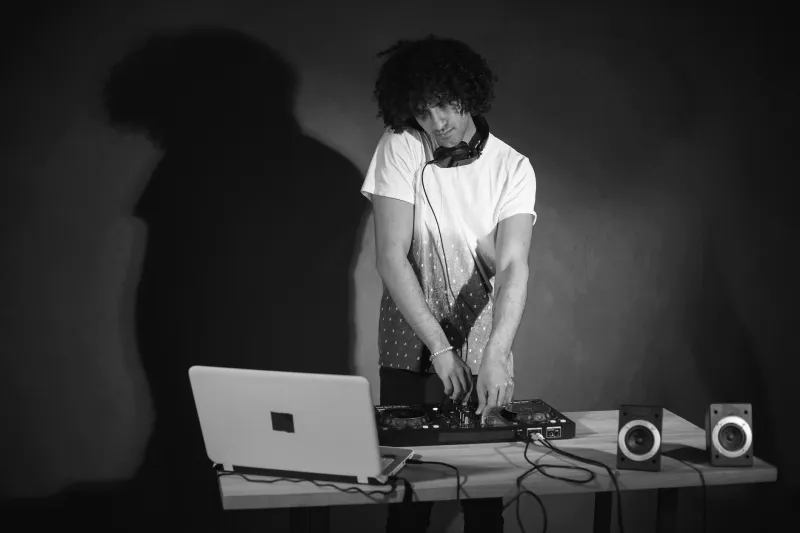
The music industry tells an even sharper version of this story. Independent artists have been building sustainable careers on Bandcamp, SoundCloud, and direct-to-fan platforms for over a decade now. But what's changed recently is the scale at which this works. Artists who would have once needed a label deal to reach a national audience are now doing it with a laptop, a decent mic, and a genuine relationship with the people who actually care about their work. The labels still exist. They still sign people. But they've lost the monopoly on what a successful music career looks like.
The Festival Problem
Festivals are maybe the most visible place where institutional authority is visibly wobbling. The prestige circuit — Sundance, SXSW, the major art fairs — still carries weight. But younger artists and audiences are increasingly asking what that weight is actually worth.
SXSW in particular has had a complicated few years, watching the independent music community it once championed grow skeptical of what the festival actually delivers versus what it charges to participate. Meanwhile, smaller, community-rooted festivals built around specific scenes and specific values have been eating into that cultural relevance in ways that don't show up in the press coverage but absolutely show up in where the interesting work is happening.
Sundance has faced its own version of this reckoning. The conversation around whose stories get greenlit, whose films get into competition, and what the festival's actual relationship is to the independent filmmaking community it claims to champion — that conversation has gotten louder and more pointed. And when it gets loud enough, even the most entrenched institutions have to at least pretend to listen.
Evolve or Become a Relic
Some institutions are actually trying. The Whitney Biennial, for all its flaws, has made genuine efforts to expand who gets included and how the selection process is interrogated. Some regional museums have started hiring community curators, building acquisition strategies that don't just recycle the same market-validated names, and rethinking what it means to serve the communities they're physically located in rather than the international collector class.
These are real changes. They're also, in many cases, changes that were forced by external pressure — by artists refusing to participate, by protests, by staff organizing, by audiences simply not showing up for programming that felt disconnected from their lives.
The Metropolitan Museum's recent pushes toward more diverse programming didn't come from the institution spontaneously deciding to be better. They came from years of sustained criticism, walkouts, open letters, and the very visible success of artists and cultural projects that operated completely outside the Met's orbit while building massive, devoted audiences. The institution adapted because it had to.
That's a meaningful distinction. There's a difference between an institution that genuinely restructures its relationship to power and one that adds a few new faces to the brochure while keeping the decision-making architecture exactly as it was. The artists paying attention know which one they're dealing with.
What the Power Shift Actually Produces
Here's what's interesting about where this goes: the collapse of institutional authority doesn't automatically produce a better or more equitable art world. It produces a more chaotic one, which creates its own set of problems.
When everyone can publish, distribute, and build an audience independently, the question of how to find genuinely excellent work gets harder, not easier. The algorithm fills the vacuum left by the gatekeeper, and the algorithm has its own biases — toward engagement, toward familiarity, toward content that confirms rather than challenges. Trading a human curator's blind spots for a platform's engagement optimization isn't obviously an improvement.
What the best artists navigating this moment seem to understand is that the goal isn't to replace institutional gatekeeping with algorithmic gatekeeping. It's to build genuine community — real relationships with real people who care about the work for its own sake. That's harder than gaming a platform. It's also more durable.
The Institutions Worth Keeping
Not every institution deserves to collapse. There are museums doing genuinely important preservation work. There are festivals that create real community and give artists resources they couldn't generate alone. There are organizations whose infrastructure makes certain kinds of work possible that wouldn't exist otherwise.
The question isn't whether institutions should exist. It's whether they deserve the authority they've accumulated — and whether they've earned the trust they've historically just assumed.
The honest answer, for most of them, is: not yet, but maybe. The work of becoming worth trusting is ongoing. And the artists who've spent years building outside the walls aren't waiting around to find out how it goes. They've already made something. The institutions can catch up if they want to.
The velvet rope was never about quality. It was about control. And control, it turns out, was always more fragile than it looked.