Nobody Waited for a Studio: The Quiet Genius of Making Art Where You Live
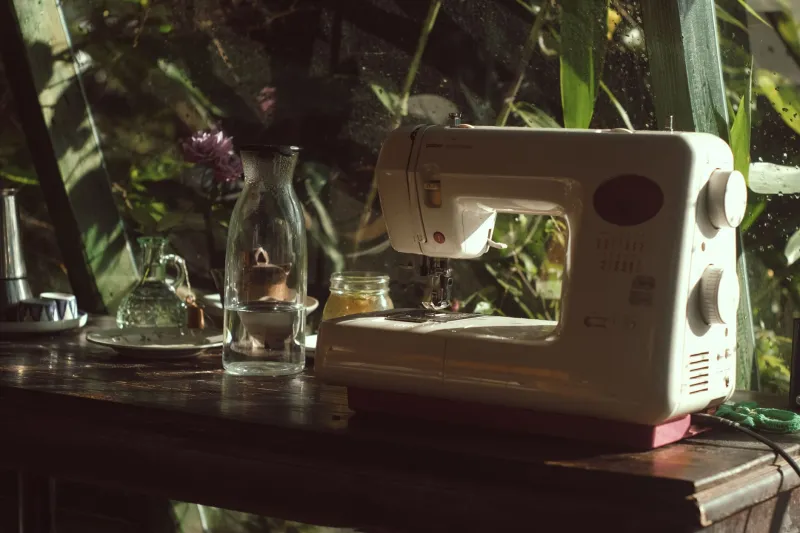
My mother learned to sew in a room that was also the living room, the guest room, and occasionally the phone room. The machine lived in a plastic closet organizer. The fabric lived in a suitcase under the bed. Nothing had a permanent address, and somehow everything got made.
For years I thought of that as a limitation — the immigrant condition of borrowed space. Now I think it might be the most useful creative education I ever got.
The Myth of the Dedicated Room
American creative culture is obsessed with the studio. The white-walled loft, the ring light, the pegboard with perfectly arranged tools. Scroll through any platform and you'll find a thousand videos about "studio setups" as if the setup is the work.
But ask around in diaspora households and you'll hear a different origin story. The novel drafted on the family laptop between a sibling's homework files. The mehndi practiced on the backs of cousins' hands at the kitchen table. The tabla in the garage, sharing square footage with a lawnmower and a Costco pack of paper towels.
In these homes, art wasn't given space. It took space. Temporarily. And it got made anyway.
Constraint as Curriculum
Here's what working at the kitchen table actually teaches you:
- You learn to start fast. When your workspace gets cleared for dinner at 6:30, you don't agonize over the perfect opening move. You make something while the window is open.
- You learn to be portable. Your project lives in a bag, a bin, a folder. This is a skill, not a compromise. Ask any working artist how much of their practice is logistics.
- You learn that the work outlasts the space. The table gets wiped down. The drawing survives. This decoupling of art from architecture is something a lot of studio-privileged creators never learn, and it shows.
Resourcefulness gets framed as a survival skill, something you do until you can afford the real thing. I want to argue the opposite: it's a discipline. A muscle. And like any muscle, it atrophies the moment you stop needing it.
The Waiting Room Problem
I know artists who have been "about to get serious" for a decade. Serious, in their heads, means: a dedicated room, a better chair, quieter walls, a desk that isn't also where bills get paid. The conditions never arrive, so the work never starts.
There's a word for a room you wait in until something better comes along. It's a waiting room. And a lot of us have turned our creative lives into one.
The kitchen table artists never had the luxury of waiting. My mother didn't wait for a design studio. She waited for the dishes to dry, and then she made a lehenga on a machine older than me that a client needed by Friday.
A Practical Word for the Still-Waiting
If you're holding out for the "real" studio, try this reframe. Spend one month treating whatever space you have — the corner, the counter, the coffee table — as the space. Not temporary. Not a placeholder. The space.
- Claim a time, not a room. Creativity scheduled by the clock survives where creativity waiting for square footage doesn't. 8 to 9 p.m., every night, wherever you are.
- Make your setup portable on purpose. One bin, one bag. The friction of packing is less than the friction of waiting.
- Let the household see you work. This is the underrated gift of the kitchen table: art that happens in public, inside the family, becomes normal instead of precious. Kids who watched a parent sew at the dinner table grow up believing making things is what people do.
- Stop redecorating. Every hour spent on the aesthetic of the workspace is an hour not spent on the work. The pegboard is not the practice.
What We Keep
I don't have a loft. I have a desk that's also where I eat lunch, in a room that's also where guests sleep. For a long time I saw that as the thing standing between me and being a real artist.
Then I looked around at the people whose work I admire most, and I noticed something. Almost all of them started at a kitchen table. Some of them never left it. The table isn't the obstacle to the art.
The table is where the art learned to be unkillable.